Heart disease symptoms can vary significantly from person to person. Some people may experience clear warning signs, while others may have subtle or no noticeable symptoms until the condition becomes more serious.
Recognizing potential heart disease symptoms early can help you seek medical attention at the right time, receive an appropriate evaluation, and reduce the risk of serious cardiovascular complications.
Are Heart Disease Symptoms Always Easy to Recognize?
Not necessarily. Some cardiovascular conditions can develop silently for a long time without causing obvious symptoms. In other cases, symptoms may appear suddenly, especially when blood flow to the heart is significantly reduced or the heart’s ability to pump blood is affected.
The symptoms also depend on the type of heart condition, its severity, the person’s age, and other health factors.
Therefore, a person should not assume that they have a healthy heart simply because they do not experience noticeable symptoms. Regular health assessments may be particularly important for people with cardiovascular risk factors.
Common Symptoms of Heart Disease
Chest Pain or Discomfort
Chest pain or discomfort is one of the symptoms that should not be ignored, particularly when it occurs during physical activity or emotional stress.
The discomfort may feel like:
- Pressure, tightness, heaviness, or squeezing in the chest
- Burning or discomfort behind the breastbone
- Pain that spreads to the arm, shoulder, back, neck, jaw, or upper abdomen
Chest discomfort can have many causes, not all of which are related to the heart. However, new, unexplained, persistent, or recurring chest pain should be medically evaluated.
Shortness of Breath
Shortness of breath may occur during physical activity or, in some cases, even while resting.
Some people may notice that they:
- Become unusually breathless after routine activities
- Have difficulty breathing when lying down
- Wake up at night because of shortness of breath
- Feel unable to take a deep or comfortable breath
Shortness of breath can be associated with various heart or lung conditions, so identifying the underlying cause is important.
Unusual or Persistent Fatigue
Feeling tired after strenuous activity is normal. However, unexplained or persistent fatigue may warrant attention, especially when it is accompanied by other symptoms such as shortness of breath, chest discomfort, dizziness, or reduced exercise tolerance.
Some people may notice that everyday activities that were previously easy—such as walking, climbing stairs, or doing household chores—suddenly make them unusually tired.
Dizziness, Lightheadedness, or Fainting
Dizziness, lightheadedness, or fainting may occur when the brain does not receive enough blood flow temporarily or when the heart’s rhythm or pumping function is affected.
These symptoms can have many different causes. However, sudden fainting, especially during physical activity, or fainting accompanied by chest pain, shortness of breath, or palpitations requires prompt medical evaluation.
Abnormal Heartbeat or Palpitations
Some people may feel that their heart is:
- Beating unusually fast
- Beating slowly
- Skipping beats
- Fluttering or pounding
- Beating irregularly
These sensations are commonly referred to as palpitations. They may occur occasionally and may not always indicate a serious heart condition.
However, recurrent palpitations or palpitations accompanied by dizziness, fainting, chest discomfort, or shortness of breath should be assessed by a healthcare professional.
Swelling in the Legs or Ankles
Swelling in the feet, ankles, or lower legs may occur when fluid accumulates in the body.
In some cases, this can be associated with problems affecting the heart’s ability to circulate blood effectively. However, leg swelling can also result from kidney disease, liver disease, certain medications, prolonged sitting or standing, and other conditions.
If swelling is persistent, worsening, or accompanied by shortness of breath or unexplained weight gain, medical evaluation may be appropriate.
Persistent Cough or Wheezing
A persistent cough or wheezing may have many causes, including respiratory conditions. However, in some people with heart problems, fluid accumulation in or around the lungs can contribute to breathing difficulties and coughing.
If a persistent cough occurs together with shortness of breath, swelling in the legs, fatigue, or difficulty breathing when lying down, it should not be overlooked.
Read more: Causes of Heart Disease
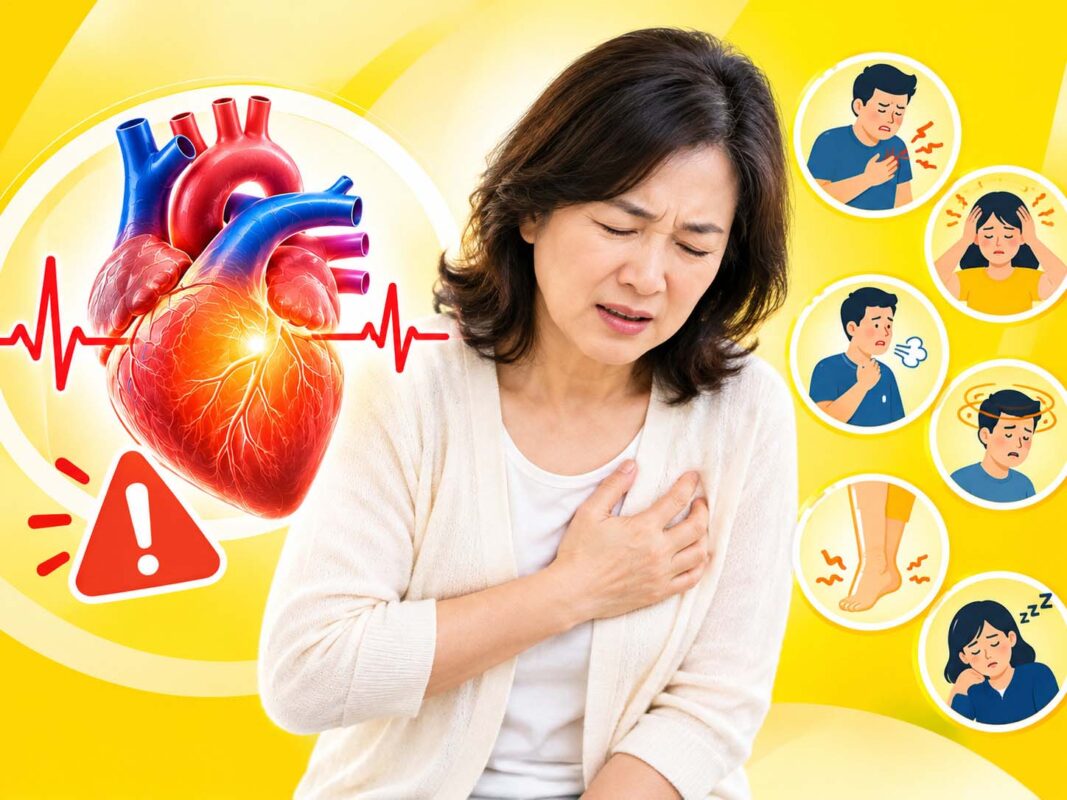
Are Heart Disease Symptoms the Same in Men and Women?
Not always.
Men and women can experience many of the same cardiovascular symptoms, such as chest discomfort, shortness of breath, fatigue, dizziness, or palpitations. However, symptoms may vary between individuals, and some women may experience less typical symptoms.
For example, women with certain heart conditions may experience symptoms such as unusual fatigue, shortness of breath, nausea, dizziness, or discomfort in the back, neck, jaw, or upper abdomen.
This does not mean that these symptoms are specific to women or that men cannot experience them. The important point is that heart disease does not always present as classic chest pain.
Therefore, unexplained or concerning symptoms should be assessed based on the overall clinical picture rather than gender alone.
When Do Heart Disease Symptoms Require Emergency Care?
Some symptoms may indicate a medical emergency, particularly when they appear suddenly or become severe.
Seek emergency medical care immediately if you or someone around you experiences:
- Severe or persistent chest pain or pressure
- Chest discomfort accompanied by shortness of breath, sweating, nausea, or dizziness
- Severe difficulty breathing
- Sudden fainting or loss of consciousness
- Sudden weakness, confusion, or other serious neurological symptoms
- A rapid or irregular heartbeat accompanied by chest pain, fainting, or severe shortness of breath
If a heart attack or another serious cardiovascular emergency is suspected, do not wait for the symptoms to disappear on their own. Prompt emergency assessment and treatment can be critical.
When Should You See a Doctor Even If Symptoms Are Not Severe?
You should consider seeing a healthcare professional if symptoms:
- Keep recurring
- Become more frequent or intense
- Appear during physical activity
- Affect your ability to perform normal daily activities
- Occur together with multiple cardiovascular symptoms
- Are accompanied by known cardiovascular risk factors
A medical evaluation may help determine whether the symptoms are related to the heart or another condition.
Depending on the situation, a healthcare professional may recommend tests such as blood pressure measurement, an electrocardiogram (ECG), blood tests, echocardiography, or other cardiovascular assessments.
What Should You Do If You Suspect Heart Disease Symptoms?
First, pay attention to the symptoms rather than ignoring them.
You can keep track of:
- When the symptoms started
- How long they lasted
- What you were doing when they occurred
- Whether physical activity or rest affected them
- Whether other symptoms occurred at the same time
If symptoms are severe, sudden, or suggest a cardiovascular emergency, seek emergency medical care rather than attempting to diagnose the condition yourself.
For recurring but less severe symptoms, schedule an appropriate medical evaluation. Early assessment can help identify cardiovascular problems and determine whether further testing or treatment is needed.
It is also important not to start or stop cardiovascular medications without medical advice.
Can Heart Disease and Its Symptoms Be Prevented?
Not every cardiovascular condition can be completely prevented. However, many risk factors for cardiovascular disease can be modified through healthier lifestyle choices and appropriate medical care.
Some practical measures include:
- Maintaining a healthy body weight
- Eating a balanced diet that supports cardiovascular health
- Limiting foods high in saturated and trans fats, excess sodium, and added sugars
- Exercising regularly according to your health condition
- Avoiding tobacco products.
- Limiting alcohol consumption
- Managing blood pressure, blood glucose, and cholesterol
- Getting adequate sleep
- Having regular health checkups when appropriate
For people who already have cardiovascular disease or significant risk factors, lifestyle changes should be combined with medical guidance rather than used as a substitute for treatment.
Conclusion
Heart disease symptoms can range from chest discomfort and shortness of breath to unusual fatigue, dizziness, palpitations, swelling, or persistent coughing. However, symptoms vary depending on the underlying condition, and some heart diseases may cause few or no noticeable symptoms in their early stages.
Recognizing warning signs is important, but symptoms alone cannot determine whether someone has heart disease. When concerning symptoms occur—especially sudden or severe chest discomfort, difficulty breathing, fainting, or symptoms suggesting a cardiovascular emergency—prompt medical attention is essential.
For recurring or unexplained symptoms, a cardiovascular health assessment can help identify potential problems early and guide appropriate follow-up.
Register for a cardiovascular health screening HERE
Taking symptoms seriously and seeking medical advice when needed is an important step toward protecting your heart health.